EN
EN CN
CN
Cardiac Ultrasound Demand in Southeast Asia: Key Growth Trends 2026–2032
Southeast Asia has emerged as one of the world’s fastest-growing markets for cardiac ultrasound devices, with a projected CAGR of 8%–12% through 2032. Driven by rising cardiovascular disease burdens, expanding public healthcare coverage, and grassroots medical infrastructure upgrades, the regional market shows distinct characteristics of polarized demand, AI popularization, and localized business model innovation. This blog breaks down the core growth drivers, segmented market trends, country-level opportunities, and industry challenges.

Surging Cardiovascular Disease Prevalence
Southeast Asia’s 670 million population faces a fast-growing cardiovascular patient base, exceeding 36.8 million in 2026 and expected to hit 45 million by 2030. High sugar diets, obesity, diabetes, smoking, and gradual aging have pushed up hypertension, heart failure, and valvular disease cases. As a radiation-free, cost-effective, and bedside-accessible diagnostic tool, cardiac ultrasound has become the first-line screening standard for primary care, emergency, and ICU scenarios across the region.
Universal Healthcare Boosts Public Procurement
Major Southeast Asian countries have rolled out universal medical insurance policies to drive centralized government procurement. Indonesia’s BPJS healthcare program equips 10,000 community health centers with ultrasound devices and cardiac phased array probes. Thailand’s UCS national health plan covers over 50 million grassroots residents with regular portable ultrasound tenders. Vietnam and the Philippines are upgrading county-level hospitals and emergency centers, mandating standard cardiac ultrasound configuration for new medical facilities.
Middle-Class Expansion & Medical Tourism Drive High-End Demand
Booming private hospitals and diagnostic centers cater to the growing middle-class population’s demand for premium physical examinations. Meanwhile, Singapore, Thailand, and Malaysia’s global medical tourism industry fuels demand for high-end 3D/4D cardiac ultrasound devices, supporting complex interventional cardiology and structural heart surgery intraoperative guidance.
Dominant Industry Trends
Polarized Market: POCUS Leads Incremental Growth
The regional market is clearly segmented into two tiers. Low-to-middle-end portable and handheld POCUS devices dominate 70% of sales, serving community clinics, ambulances, mobile medical teams, and remote island healthcare services with a 10%–12% annual growth rate. High-end cart-based 3D/4D ultrasound systems occupy 30% of revenue, focusing on tertiary hospitals and premium private medical institutions with steady 5%–7% replacement growth.
AI Ultrasound Becomes a Core Competitive Threshold
Southeast Asia faces a severe shortage of professional cardiac sonographers, making AI functionality a rigid procurement requirement. Automatic EF calculation, valvular quantitative analysis, myocardial strain measurement, and automatic cardiac cavity detection greatly reduce operational thresholds for general practitioners and emergency doctors. Devices without built-in cardiac AI have lost core competitiveness in public bidding scenarios.
Multi-Functional All-in-One Devices Replace Single-Function Equipment
Constrained by grassroots medical budgets, Southeast Asian public institutions prefer multi-purpose ultrasound devices. Standard configurations with cardiac phased array probes that support abdominal, obstetric, vascular, and emergency scanning are mainstream purchases. Pure professional cardiac-specific ultrasound machines are only adopted by specialized cardiac centers, with shrinking market demand.

Business Model Shifts from Device Sales to Service Bundles
The regional market has shifted from one-time equipment sales to recurring service revenue. Public sectors favor long-term framework agreements and full-lifecycle cost (TCO) packages including maintenance and probe replacement. Private markets focus on after-sales response and localized training. Probe replacement, annual maintenance, and AI software subscriptions now contribute 45%–55% of total industry revenue, while equipment leasing models solve grassroots budget pressure effectively.
Country-Level Market Segmentation & Opportunities
Indonesia: Largest Regional Incremental Market
As Southeast Asia’s most populous country, Indonesia relies heavily on imported ultrasound equipment. Its public healthcare system prioritizes cost-effective portable cardiac ultrasound for grassroots facilities. Localization (TKDN) policy preferences benefit manufacturers with local assembly capabilities, bringing massive centralized procurement opportunities.
Vietnam: Fastest-Growing Emerging Market
Vietnam’s ongoing county-level hospital upgrades and private diagnostic chain expansion drive strong demand for notebook portable cardiac ultrasound. With flexible registration policies and low market entry barriers, it is the preferred breakthrough market for new entrants.
Thailand & Malaysia: Mature High-End Markets
These two countries feature balanced public and private medical systems. Relying on medical tourism, they maintain stable demand for high-end 3D cardiac ultrasound and intraoperative imaging equipment. The market is dominated by premium international brands, focusing on equipment iteration and stock replacement demand.
Philippines: Typical POCUS Application Market
The country’s scattered island geography creates strong demand for wireless handheld cardiac ultrasound for mobile diagnosis and remote medical services. Budget-sensitive local institutions show high acceptance for cost-effective Chinese mid-to-low-end devices.
Key Industry Challenges
Fragmented Regional Regulatory Standards
ASEAN 10 countries have independent medical device registration systems with varying cycles, materials, and approval standards. New product launch cycles range from 3 to 9 months, increasing regional layout costs for manufacturers.
Severe Shortage of Professional Talents
The lack of licensed cardiac sonographers across the region restricts full-capacity utilization of medical devices. Most grassroots medical staff lack professional cardiac ultrasound diagnosis capabilities, hindering the popularization of high-end diagnostic applications.
Uneven Medical Infrastructure Distribution
Remote areas and scattered islands suffer from unstable power supply and insufficient network coverage, limiting the large-scale promotion of wireless handheld devices and cloud-based remote ultrasound diagnosis systems.
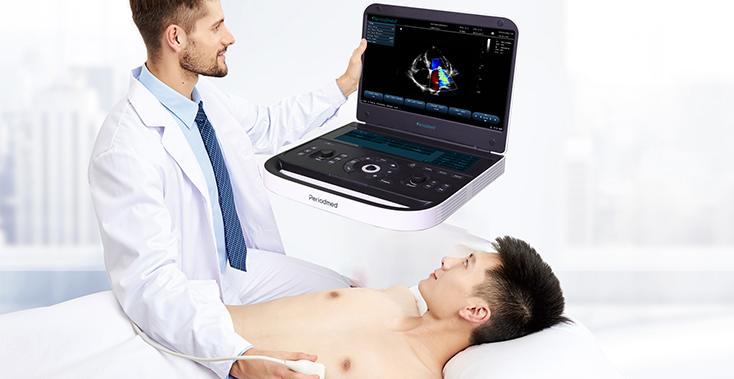
Featured Product: Periodmed Revo 9 Cardiac Ultrasound System
The Periodmed Revo 9 ultra-portable multi-purpose ultrasound delivers crisp cardiac imaging via ProOpti™ and TDI technology. It supports phased array cardiac probes, multi-language interfaces including Indonesian, and full DICOM compatibility, perfectly fitting grassroots and mobile POCUS workflows across Southeast Asia.
Future Market Outlook (2026–2032)
In the next 3–6 years, Southeast Asia’s cardiac ultrasound market will maintain high growth. Portable AI-powered multi-functional POCUS devices will remain the core incremental track for grassroots public markets. High-end 3D interventional ultrasound will steadily expand with the development of cardiac surgery and medical tourism. Cloud ultrasound remote consultation and equipment leasing bundled service models will become mainstream industry trends. Meanwhile, Chinese brands will accelerate substitution of European, American, and Japanese products in the mid-to-low-end market with cost advantages and localized service capabilities.
Conclusion
Driven by disease burden, policy dividends, and consumption upgrading, Southeast Asia’s cardiac ultrasound industry is in a golden growth cycle. Market segmentation, AI intelligence, multi-functional integration, and service-oriented transformation are irreversible trends. Manufacturers and distributors should focus on differentiated product layouts and localized service strategies to capture regional incremental opportunities.