EN
EN CN
CN
How to Read a Vital Signs Monitor
In critical care units (CCUs), ICUs, or even general wards, patient monitors are the “first line of defense” against unseen physiological deterioration. For clinicians, accurate interpretation of monitor data can mean the difference between timely intervention and adverse outcomes; for global distributors, understanding how a monitor’s design enhances usability is key to meeting clinical demand. This guide demystifies patient monitor reading—from core vital signs to alarm systems—while highlighting how Periodmed’s E4 CCU Vital Signs Monitor and E8 Bedside Vital Signs Monitor elevate clarity, reliability, and portability for modern healthcare settings.
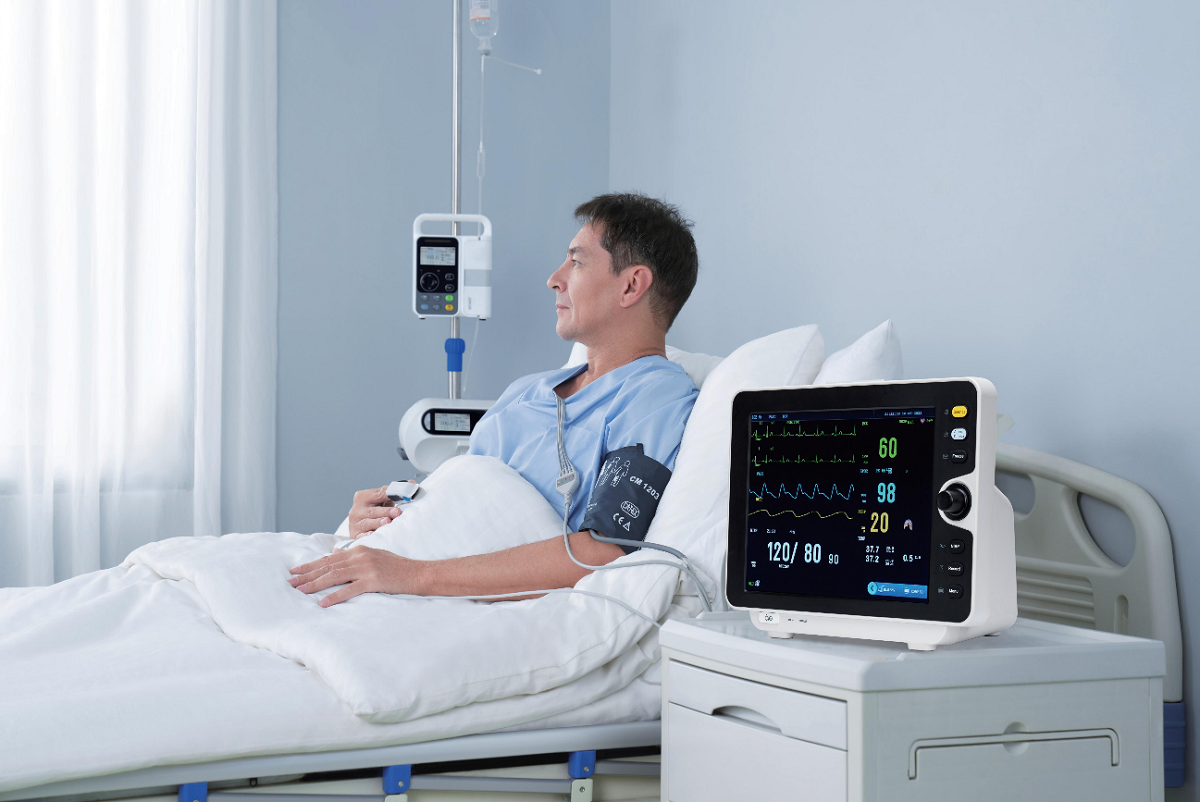
Understand the Core Vital Signs & Normal Ranges
Every patient monitor displays key physiological parameters, each with defined normal ranges (per clinical guidelines from Johns Hopkins Medicine, Mayo Clinic, and WebMD). Below is how to identify, interpret, and act on each:
1. Heart Rate (HR/PR)
● Display Location: Typically labeled “HR” (heart rate) or “PR” (pulse rate), shown as a numerical value (e.g., 75 bpm) with a waveform (if ECG is enabled).
● Normal Range: 60–100 bpm for healthy adults; athletes may have lower rates (40–60 bpm).
● Interpretation:<60 bpm (bradycardia): Could signal medication side effects or heart conduction issues (critical if <50 bpm with symptoms like dizziness).
2. Blood Pressure (NIBP)
● Display Location: Labeled “NIBP” (non-invasive blood pressure), shown as two numbers: systolic/diastolic (e.g., 120/80 mmHg).
● Normal Range: Systolic 100–130 mmHg; diastolic 60–80 mmHg (per American Heart Association).
● Interpretation:<90/60 mmHg: Hypotension (risk of organ hypoperfusion—urgent if paired with confusion or cool skin).
3. Oxygen Saturation (SpO₂)
● Display Location: Labeled “SpO₂,” shown as a percentage (e.g., 98%) with a pulse waveform.
● Normal Range: ≥95% (Mayo Clinic); <90% is hypoxemia (requires oxygen intervention).
● Interpretation: Even small drops (e.g., 95% to 92%) matter—common triggers include pneumonia, asthma, or dislodged oxygen cannulas.
4. Respiration Rate (RR)
● Display Location: Labeled “RR,” shown as breaths per minute (e.g., 14 rpm).
● Normal Range: 12–16 rpm for resting adults (WebMD).
● Interpretation:<10 rpm (bradypnea): May result from sedation or respiratory muscle weakness (life-threatening if paired with low SpO₂).
5. Temperature (TEMP)
● Display Location: Labeled “TEMP,” shown in °F or °C (e.g., 37.1°C / 98.8°F).
● Normal Range: 98.0–99.0°F (36.7–37.2°C); slight variations by time of day are normal.
● Interpretation: >100.4°F (38°C) signals fever (likely infection); <95°F (35°C) is hypothermia (risk in post-op or elderly patients).
Decode Monitor Alarms—Avoid False Alerts, Prioritize Urgency
Alarms are designed to flag abnormalities, but 70% of hospital monitor alarms are false (often due to loose sensors or patient movement). To reduce false alarms, ensure sensors are properly attached—for example, SpO₂ clips should fit snugly (not too tight) on the finger, and NIBP cuffs must match the patient’s arm size (a cuff that’s too small overestimates BP). Here’s how to respond effectively:
Alarm Triggers & Responses
| Alarm Type | What It Means | Action |
| Low-priority (yellow) | Parameter slightly outside range (e.g., SpO₂ 93%). | Check sensor placement; adjust oxygen flow if needed. |
| Medium-priority (orange) | Parameter moderately abnormal (e.g., BP 150/95 mmHg). | Recheck vital signs; review medication list. |
| High-priority (red) | Life-threatening issue (e.g., SpO₂ <88%, HR <40 bpm). | Activate emergency response; stabilize patient (e.g., administer oxygen). |
Real-World Impact: Customer Success with Periodmed Patient Monitor
For global distributors, the true test of a monitor is how it performs in local healthcare contexts—especially in regions like the Philippines, where rural-urban disparities, frequent power interruptions, and resource constraints demand durable, flexible solutions. Just ask one of our local customer in Philippine, which is a leading medical device distributor that partnered with Periodmed in 2023 to equip provincial hospitals and rural health units (RHUs) with the E4 and E8 patient monitors.

The Challenge: Outdated Monitors Holding Back Care
Before Periodmed, the customer’s hospital clients faced two major hurdles:
● Portability Gaps: Rural hospitals like Bohol Provincial Hospital struggled to monitor patients during ambulance transfers (often 2–3 hours long) because their old monitors were bulky and required AC power—unreliable in areas with frequent blackouts.
● Usability Issues: Nurses in the ICU wasted 15–20 minutes daily troubleshooting false SpO₂ alarms from outdated devices, diverting time from patient care.
The Solution: E4 for Mobility, E8 for Bedside Reliability
The customer tailored Periodmed’s lineup to solve these pain points:
● E4 CCU Monitor for Rural Transport & CCUs:
E4 can be used in ambulance fleets. Its 5+ hour battery life keeps monitoring continuous during power outages, and the IP22 dust/water resistance withstands the humid, rainy conditions. “During a recent typhoon, we transferred a 72-year-old patient with pneumonia from a remote rural community hospital to Provincial hospital,” says one of our customer who is a hospital’s emergency department chief. “The E4’s clear SpO₂ display showed her oxygen levels drop to 91% mid-ride—we adjusted her oxygen immediately. Without that real-time data, she could have gone into respiratory distress.”
The E4’s compact size also fits easily in the ambulance’s limited space, a huge improvement over the old 5kg monitors.
● E8 Bedside Monitor for ICUs & Wards:
One of our customer's hopsital ICU replaced its outdated bedside monitors with the E8, drawn to its 170° viewing angle (nurses can read values from across the room) and 240 hours of trend data. “We used to spend hours compiling daily BP and HR trends for post-op patients,” explains Nurse Liza Gomez. “Now the E8 stores it all—we just pull up the graph, and we can see if a patient’s heart rate is spiking at night. Plus, the anti-motion SpO₂ sensor cut false alarms by 80%—we’re finally able to focus on care, not beeping.”

Why Periodmed Stands Out for Distributors & Clinicians
Our customer story illustrates what makes Periodmed’s monitors a win-win:
● Clinician-Centric Design: Features like the E4’s portability and E8’s trend data directly solve daily workflow pain points.
● Global Adaptability: The E4’s multi-power options (AC, car charging, battery) and E8’s regulatory compliance (CE, ISO 13485) make them easy for distributors to sell in diverse markets—from the Philippines’ rural RHUs to urban hospitals in Southeast Asia.
● Partner Support: Periodmed provided customers with localized training materials (in English and Tagalog) and spare parts, ensuring smooth deployment and customer satisfaction.
Conclusion
Reading a patient monitor is more than understanding numbers—it’s about translating data into action.
For distributors, this means more than sales—it means partnering with a brand that helps hospitals deliver better care. For clinicians, it means tools that work as hard as they do.
Contact us to bring Periodmed’s life-saving monitors to your region, contact our team today. Together, we’ll turn data into impact.