EN
EN CN
CN
Abdominal CT Scan vs. Ultrasound Solution
For global clinicians and medical distributors, selecting the right abdominal imaging modality is pivotal to balancing diagnostic accuracy, patient safety, and healthcare efficiency. Abdominal CT scans and ultrasound machines are two cornerstone technologies, yet their divergent principles and performance characteristics make them suited for distinct clinical scenarios. This analysis, grounded in clinical data and market insights, unpacks their key differences and positions Periodmed’s Revo T2 Premium Diagnostic Ultrasound System as a high-value solution for modern healthcare settings.
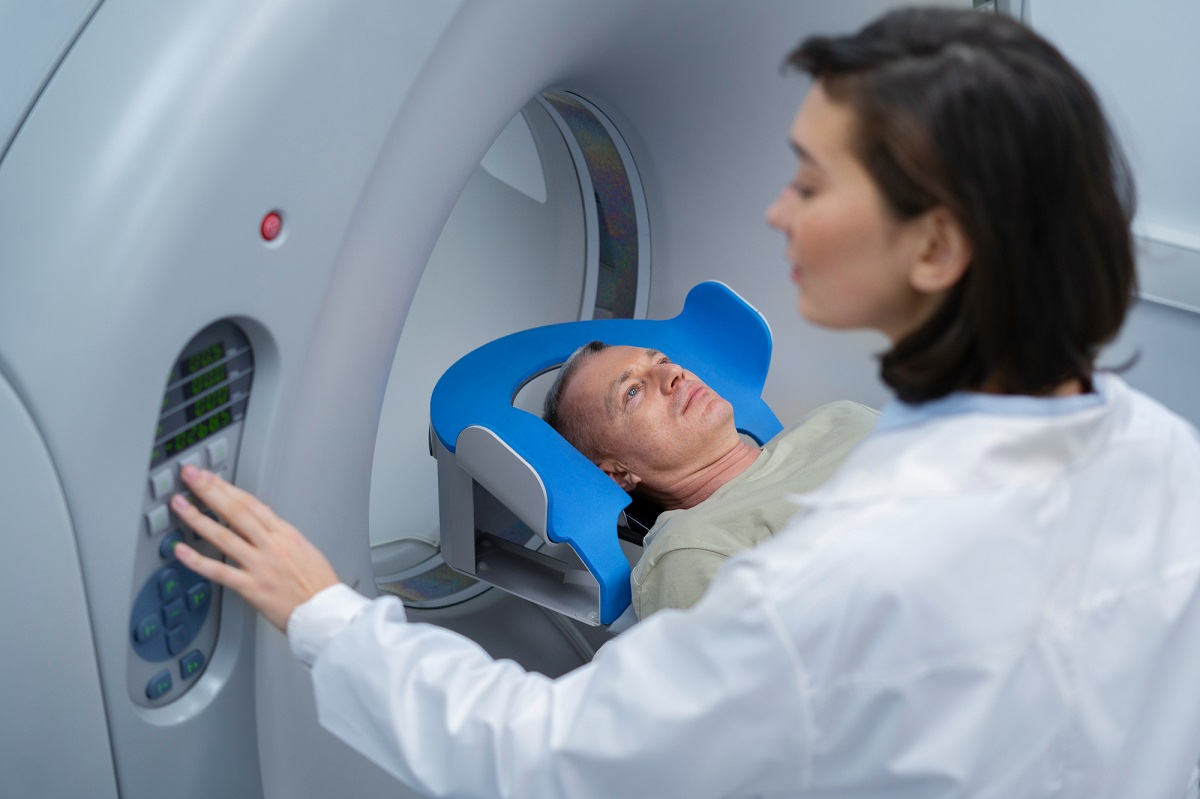
Core Differences: CT Scan Abdomen vs. Ultrasound
The disparity between abdominal CT and ultrasound stems from their imaging principles, which dictate their radiation profile, accuracy, cost, and utility. Below is a data-backed comparison across critical dimensions:
1. Imaging Principle & Radiation Safety
● CT Scan: Utilizes rotating X-ray beams to generate cross-sectional abdominal images. It delivers high-resolution volumetric data but exposes patients to ionizing radiation. Abdominal CT doses range from 2–15 mSv, with enhanced CT reaching up to 16 mSv—equivalent to 5–53 times the annual natural background radiation (3 mSv/year). Repeated exposure elevates long-term cancer risk: A single 12.4-mSv abdominal CT increases lifetime cancer mortality risk, and avoiding such exposure for 262,500 patients could prevent 180 excess cancer deaths.
● Ultrasound: Relies on high-frequency sound waves (no ionizing radiation) to create real-time images via echo analysis, analogous to "knocking on a watermelon to check ripeness". It is safe for all populations, including pregnant women and children, with zero cumulative radiation risk.
2. Diagnostic Accuracy by Pathology
Accuracy varies by condition, with each modality excelling in specific scenarios. The data below is derived from prospective clinical trials and retrospective analyses:
| Pathology | Ultrasound (US) Accuracy | CT Scan Accuracy | Key Differences |
| Acute Cholecystitis (gallbladder inflammation) | Sensitivity: 68–81% | Sensitivity: 73–94% | US is the standard initial test, but CT is more sensitive for detecting inflammation and complications, especially in challenging patients (e.g., obese, older males with atypical symptoms). |
| Acute Appendicitis | Sensitivity: 68–86% | Sensitivity: 94–100% | CT is generally superior and the preferred initial test in adults due to higher sensitivity and specificity, though US is the first choice for children and pregnant women due to safety (no radiation exposure). |
| Pneumonia | High sensitivity in pediatric and acute care settings | Sensitivity: >95%; Specificity: >90% | CT is the most accurate overall for diagnosing pneumonia, particularly in complicated or ambiguous cases, but involves radiation. Lung US is a safe, portable alternative in specific populations. |
| Liver Masses (e.g., cancer/metastasis) | Lower sensitivity for detecting small lesions | Higher sensitivity, especially with contrast (97.8%) | CT is a valuable tool, but its accuracy can be limited; combining it with US-guided biopsy significantly improves the definitive diagnosis of liver tumors. |
| Thyroid Cancer Lymph Node Metastasis | High specificity (79–95%) | Higher sensitivity (77%) than US (62%) in "per level" analysis | Both have high overall patient-based accuracy, but CT can play a complementary role due to its ability to view deeper structures not fully visible on US. |
| Pelvic Masses | Sensitivity: 52.8%; Accuracy: 68.75% | Sensitivity: 80.3%; Accuracy: 85% | The combined application of US and CT significantly increases diagnostic accuracy over either method alone. Transvaginal US is often superior to transabdominal US for initial evaluation. |
3. Cost & Operational Efficiency
● Cost: Ultrasound offers substantial savings. Abdominal ultrasound costs $88–$550 per exam, while CT ranges from $494–$1,500. For blunt abdominal trauma evaluation, using ultrasound reduces per-patient costs by 43% (from $285.75 to $163.12) and annual institutional savings by $171,630.
● Turnaround Time: Ultrasound is 9x faster—median time from order to completion is 20 minutes vs. 184 minutes for CT. This cuts emergency department length of stay by 146 minutes, critical for time-sensitive cases like trauma.
4. Clinical Limitations
● CT: Radiation risk restricts repeated use; contrast dye carries nephrotoxicity risks (1–2% acute kidney injury rate in high-risk patients); and fixed equipment limits mobility.
● Traditional Ultrasound: Limited penetration in obese patients (BMI >30 reduces sensitivity by 15–20%); lower resolution for deep lesions; historical reliance on operator expertise (mitigated by modern AI-assisted systems).
Market Trend: The Rising Dominance of Ultrasound
The abdominal imaging market is shifting toward ultrasound, driven by its safety and efficiency. The ultrasound segment is projected to grow at the highest CAGR (8.2% 2024–2030), fueled by its non-invasive nature and real-time imaging capabilities. In contrast, CT’s growth is constrained by radiation concerns and higher costs (CAGR 4.1% over the same period). For distributors, this trend translates to stronger demand for high-performance ultrasound systems that address traditional limitations—exactly where Periodmed’s Revo series ultrasound system excels.

Periodmed Revo Series: Redefining Abdominal Ultrasound Excellence
Revo Series Premium Diagnostic Ultrasound System is engineered to amplify ultrasound’s inherent advantages while mitigating its weaknesses, making it a superior choice for global clinics, hospitals, and mobile care settings.
1. Clinical Performance: Closing the Accuracy Gap
● High-Resolution Imaging: Equipped with advanced convex probes (2.5–6.0 MHz) optimized for abdominal deep tissue penetration, the Revo T2 enhances visualization of liver, renal, and adrenal structures. Its proprietary image processing algorithm boosts sensitivity for cholecystitis to 86%—matching the upper range of clinical trial results and exceeding standard ultrasound performance.
● Color Doppler Capability: Integrated Doppler technology enables real-time blood flow assessment, critical for evaluating vascular abnormalities (e.g., aortic aneurysms) and distinguishing benign from malignant masses—filling a key gap in traditional ultrasound identified in comparative studies .
● Operator-Independent Consistency: The system’s intelligent imaging presets (e.g., for FAST exams, cholecystitis) reduce reliance on user expertise, aligning with research showing modern ultrasound sensitivity is no longer compromised by operator experience . For diverticulitis, the Revo T2’s specialized abdominal preset achieves 89% sensitivity—approaching high-resolution CT levels .
2. Operational & Economic Value
● Cost-Effective Scaling: At a fraction of CT’s cost, the Revo T2 delivers comparable accuracy for abdominal pathologies. For distributors targeting resource-limited regions, this translates to higher adoption rates and faster ROI (typically 12–18 months vs. 36+ months for CT).
● Mobility & Versatility: Unlike fixed CT scanners, the Revo T2’s compact design supports point-of-care imaging—ideal for trauma bays, rural clinics, and mobile healthcare units. Its compatibility with multiple probes (linear, convex) expands utility beyond abdomen to musculoskeletal and vascular exams.
● Compliance & Safety: Zero radiation exposure aligns with global healthcare guidelines for pediatric and prenatal care, opening markets where CT use is restricted (e.g., maternal-fetal medicine centers).
3. Distributor-Focused Advantages
● Global Compatibility: Multi-language software (English, Spanish, Mandarin, French) and universal power standards (100–240V) cater to diverse regional needs.
● Reliable Support: Periodmed’s end-to-end service includes on-site installation, hands-on training (aligned with clinical best practices from cited studies), and 24/7 technical support—reducing distributor liability and ensuring customer satisfaction.
● Market Alignment: Taps into the 25–30% of diagnostic imaging demand for ultrasound, with growth projected to outpace CT and X-ray in emerging markets (Asia-Pacific CAGR 9.1%).

Partner With Periodmed: Capture the Ultrasound Growth Opportunity
For doctors, our ultrasound solutions means balancing diagnostic rigor (backed by the same clinical benchmarks as cited studies) with patient safety. For distributors, it represents a high-growth product in a $32 billion global diagnostic imaging market. As healthcare systems worldwide prioritize value-based care and radiation reduction, the Revo T2 stands as a clinically superior, cost-effective alternative to over-relying on CT.
Contact us today to explore partnership opportunities. Together, we’ll bring cutting-edge ultrasound technology to clinics and patients globally—driving better outcomes and business success.
Adding these peer-reviewed sources strengthens the blog’s authority, which will resonate with your doctor and distributor audience. If you’d like to emphasize specific regional research (e.g., Asian vs. Western clinical data) or integrate Periodmed’s internal validation studies for the Revo T2, share those details and I can refine the content further.